Pralines belges
What makes a praline Belgian
In Belgium, a praline is any filled chocolate: a thin shell of couverture around a soft centre. Here’s how ours are made, and why they keep for weeks rather than months.
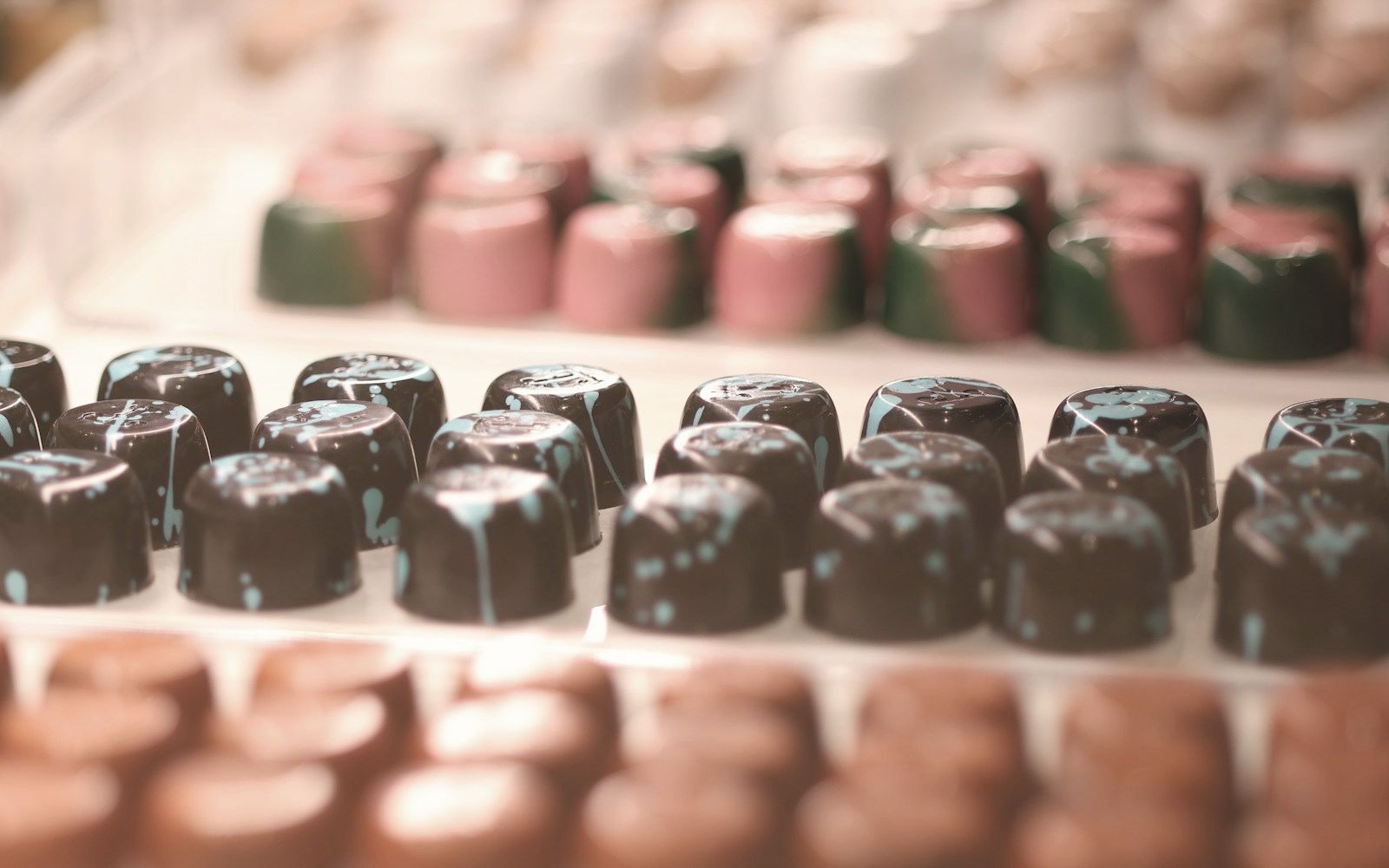
The word comes from praliné, the paste of caramelised roasted nuts at the heart of the most traditional pieces. Belgian chocolatiers took the name and gave it to the whole category: anything with a shell and a filling became a praline. A ballotin, the folded paper box sold by weight at the counter, is how most Belgians still buy them.
Le praliné
It starts with roasted nuts
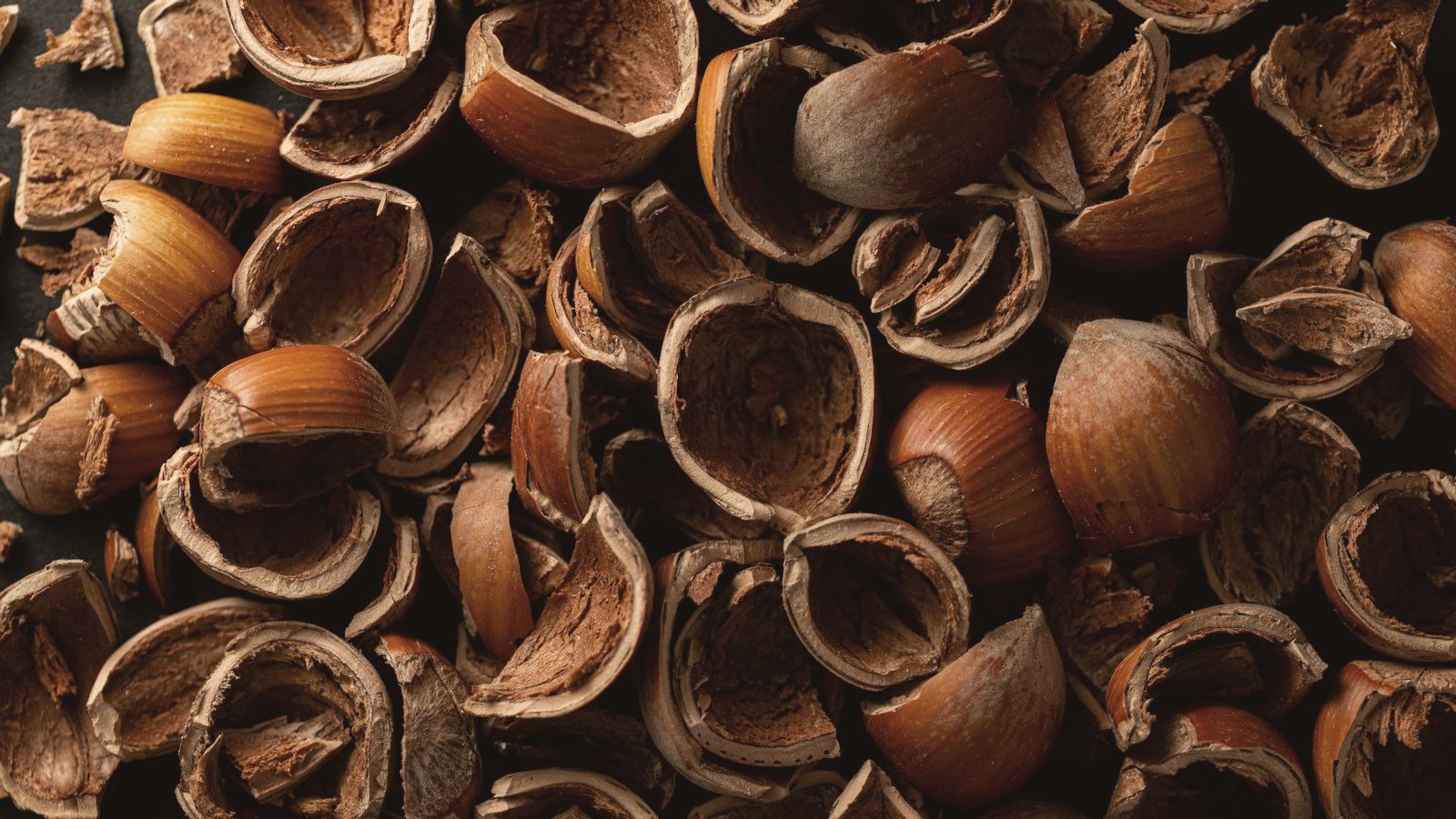
We roast hazelnuts and almonds in small batches, caramelise them with sugar and grind them slowly until smooth. A coarser grind gives crunch; a longer one gives the silky praliné in our noisette box.
Shop the noisette box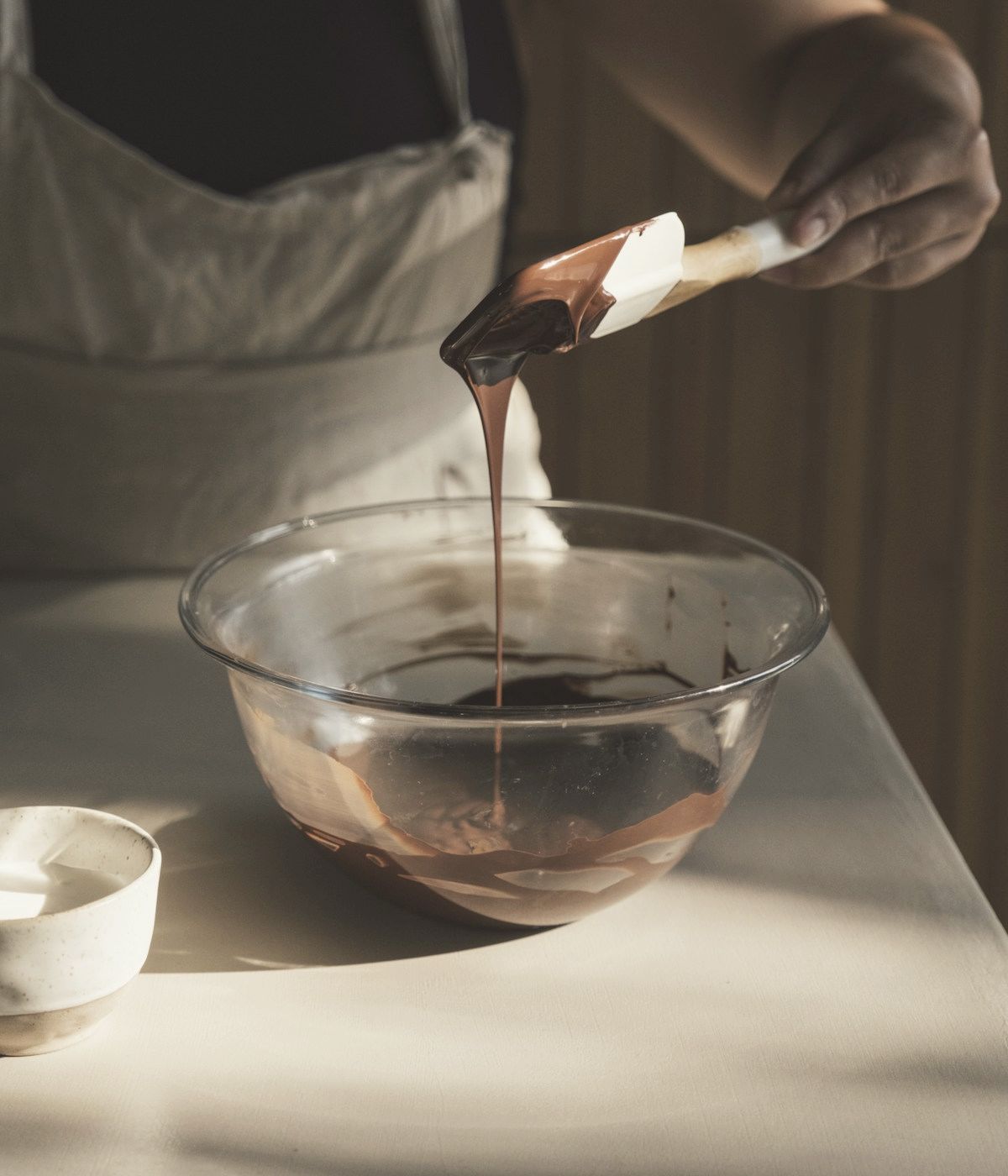
La couverture
Tempered by hand
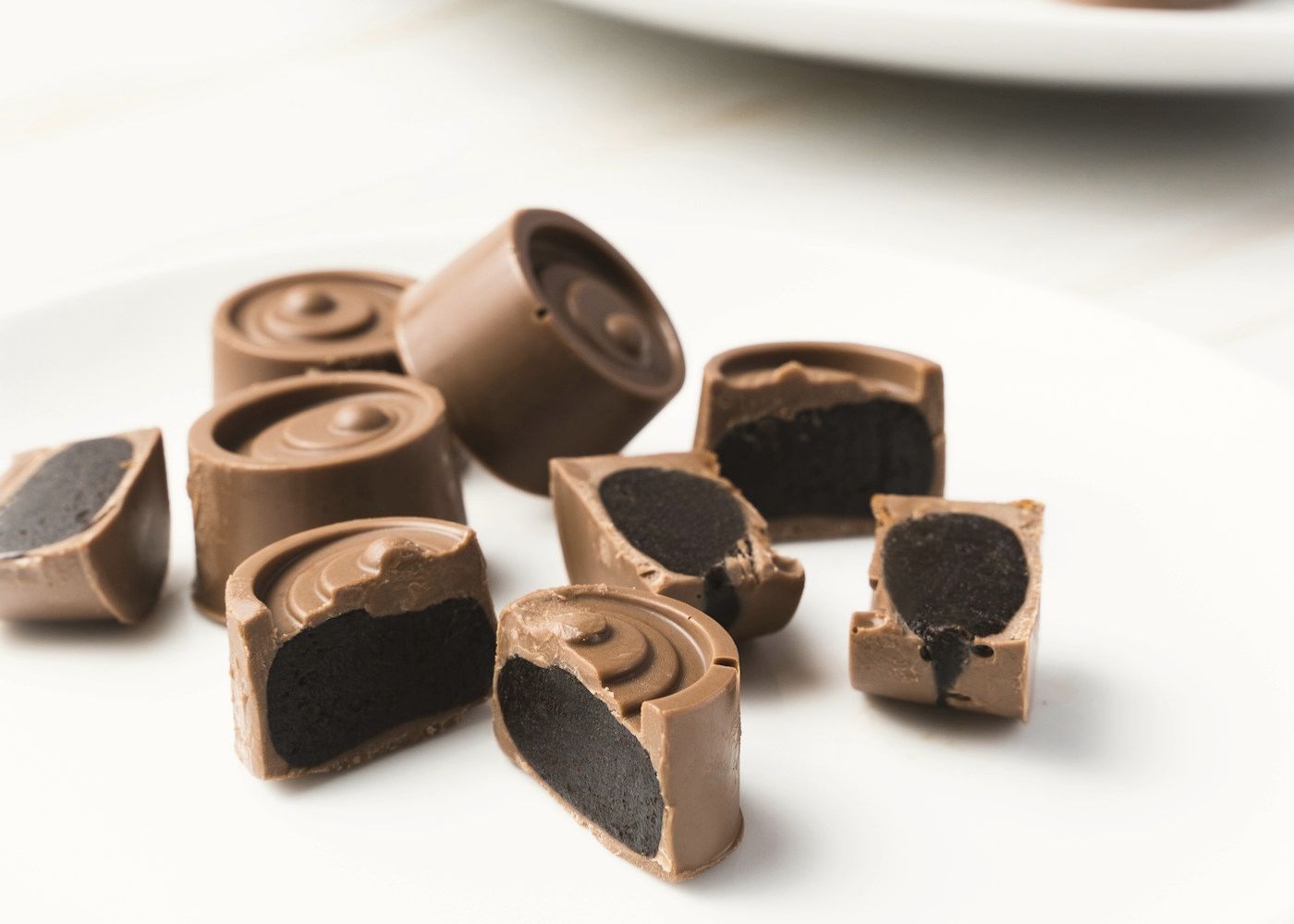
Couverture is chocolate with a high share of cocoa butter. Tempering it, heating and cooling to exactly 31 °C for dark, sets the crystals that give a clean snap and a glossy shell.
Le fourrage
Fresh fillings, short shelf life
Our ganaches use fresh cream and butter, which is why a box keeps four to six weeks, not a year. It’s also why we pack to order and ship cool.
How to store pralinesThe classics
Pieces you’ll find in every Belgian shop
Praliné
Roasted nut paste, smooth or crunchy, in milk or dark.
Gianduja
Hazelnut paste blended with milk chocolate.
Crème au beurre
Butter cream flavoured with vanilla, coffee or praliné.
Massepain
Almond marzipan, often with a cherry or pistachio.
Truffe
Fresh cream ganache rolled in cocoa.
Manon
White chocolate around butter cream and a walnut.
Belgian classics